







Cultural & Heritage in Dubai
Dubai Creek (Khor Dubai)
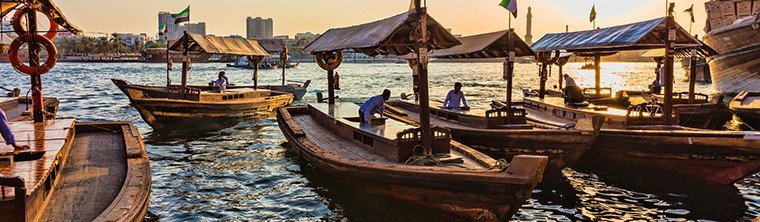
Cutting through the heart of Dubai, the seawater Dubai Creek winds its way from the trading port on the Gulf to the Ras al Khor bird sanctuary on the desert edge of Dubai. Old-fashioned boats called dhows criss-cross the water from Bur Dubai on the south bank to Deira on the north. Catch a water taxi dhow, called an abra, to get from A to B, or sign up for a romantic sunset cruise traveling further upstream. A cruise reveals the glittering high-rise buildings lining the Creek, passing under several bridges to reach the Creekside gardens. Or take a stroll along the paved promenade lining the Creek on the Bur Dubai side of the waterway.
Bastakia Quarter (Bur Bastakia)
The lovely Bastakia Quarter, or Bur Bastakia, is Dubai’s historic heart. Here, in the narrow whitewashed lanes overlooked by lofty wind towers of traditional courtyard houses, the glitz and glamour of Sheikh Zayed Road and the Mall of the Emirates feel centuries away. This is a place for wandering and soaking up the atmosphere, catching glimpses through shuttered gateways into the tranquil courtyards of traditional homes, hearing the sound of trickling fountains, and seeing sprays of purple bougainvillea add a dash of color to the passageways’ high whitewashed walls. Several of the gorgeous courtyard buildings host art galleries showcasing the work of local artists, and their garden cafes provide a relaxing oasis. A colorful souk market is held here on Saturdays, featuring books, arts and crafts, and fashion.
Bur Dubai Village
Bur Dubai Village, located near the mouth of Dubai Creek, takes visitors back in time through a series of heritage villages complete with recreated architecture and local artisans practicing their crafts using traditional techniques. For shoppers, the village is a great place to find unique, handmade items to take home as souvenirs or gifts. Long before the skyscrapers and palm-shaped islands, Dubai’s economy relied heavily on pearling. Teams of men would spend months at a time at sea diving for the rose-colored pearls produced in the Persian Gulf. One of the most unique experiences at the Bur Dubai Village is the opportunity to learn more about the city’s pearl diving culture and watch a demonstration of how it is done. Bur Dubai Village is open every day of the week, but Friday hours are limited and many of the shop will be closed. After you’ve toured the heritage village, set aside some time for a meal or drink by the waterside.
Dubai Museum
This is the main museum in Dubai. It is located in the Al Fahidi Fort, built in 1787 and is the oldest existing building in Dubai. The museum was opened by the ruler of Dubai in 1971, with the aim of presenting the traditional way of life in the Emirate of Dubai. It includes local antiquities as well as artifacts from African and Asian countries that traded with Dubai. It also includes several dioramas showing life in the emirate before the advent of oil. In addition to artifacts from recent discoveries as old as 3000 B.C. Entrance to the galleries is located at the tower on the south-western corner of the fort. After descending the spiral stairs visitors enter the first gallery, where old maps of Dubai are displayed. Next is the video room, showing a video, updated in 2007, which depicts Dubai from before the discovery of oil in the 1960s to the current day. Below it there is a map that shows the urban scape of the city growing in sync with the timeline of the video.